Design, Risk & Software





Match development documents to the decision and evidence needed
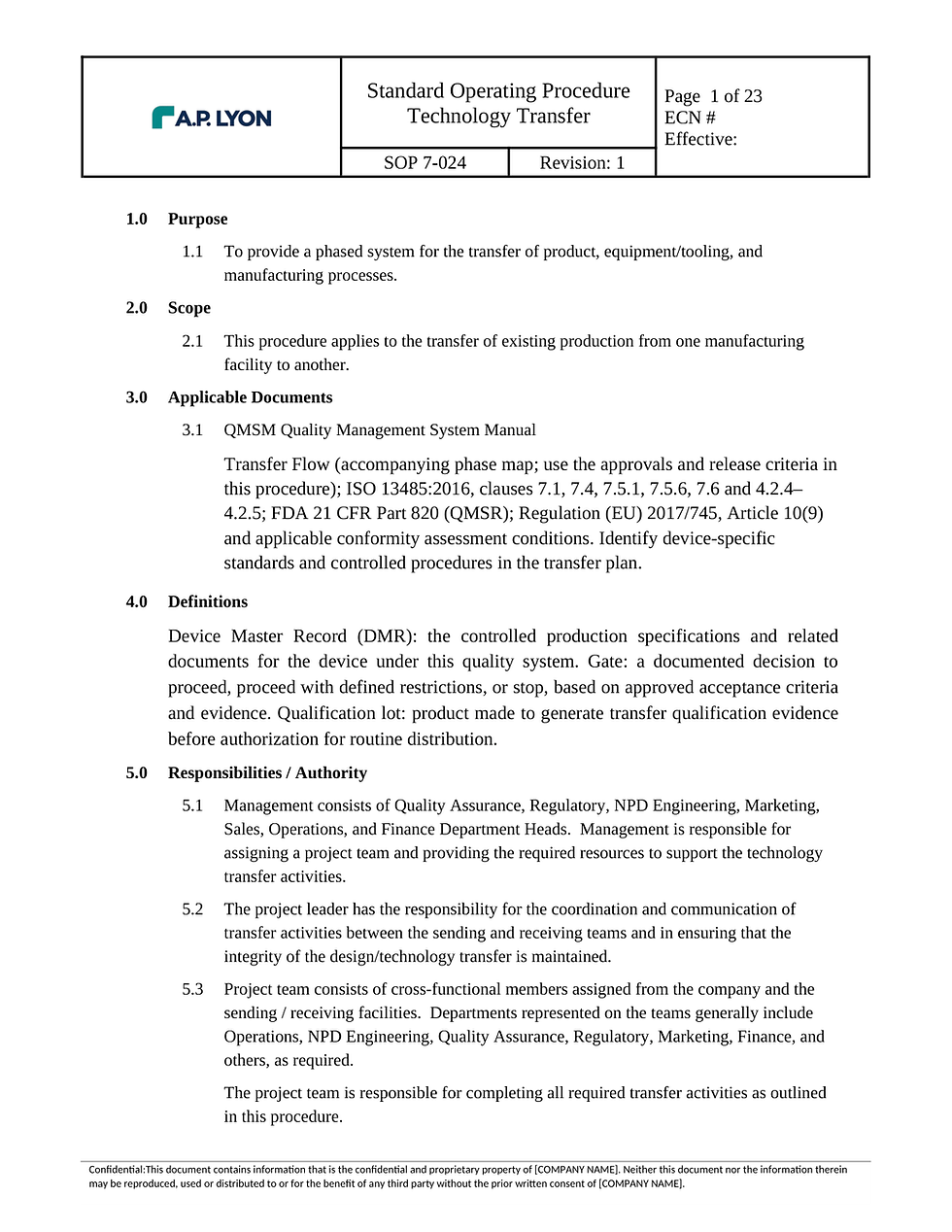
Design Control organizes the development process. Design Review records milestone decisions. Design Verification and Validation distinguish evidence against design inputs from evidence of user needs and intended use. Design Transfer addresses the handoff to manufacturing.
Risk Management provides the wider lifecycle framework; Design Risk Management and Process Risk Management focus on different sources of risk. Human Factors addresses users, environments, critical tasks and use-related risks.
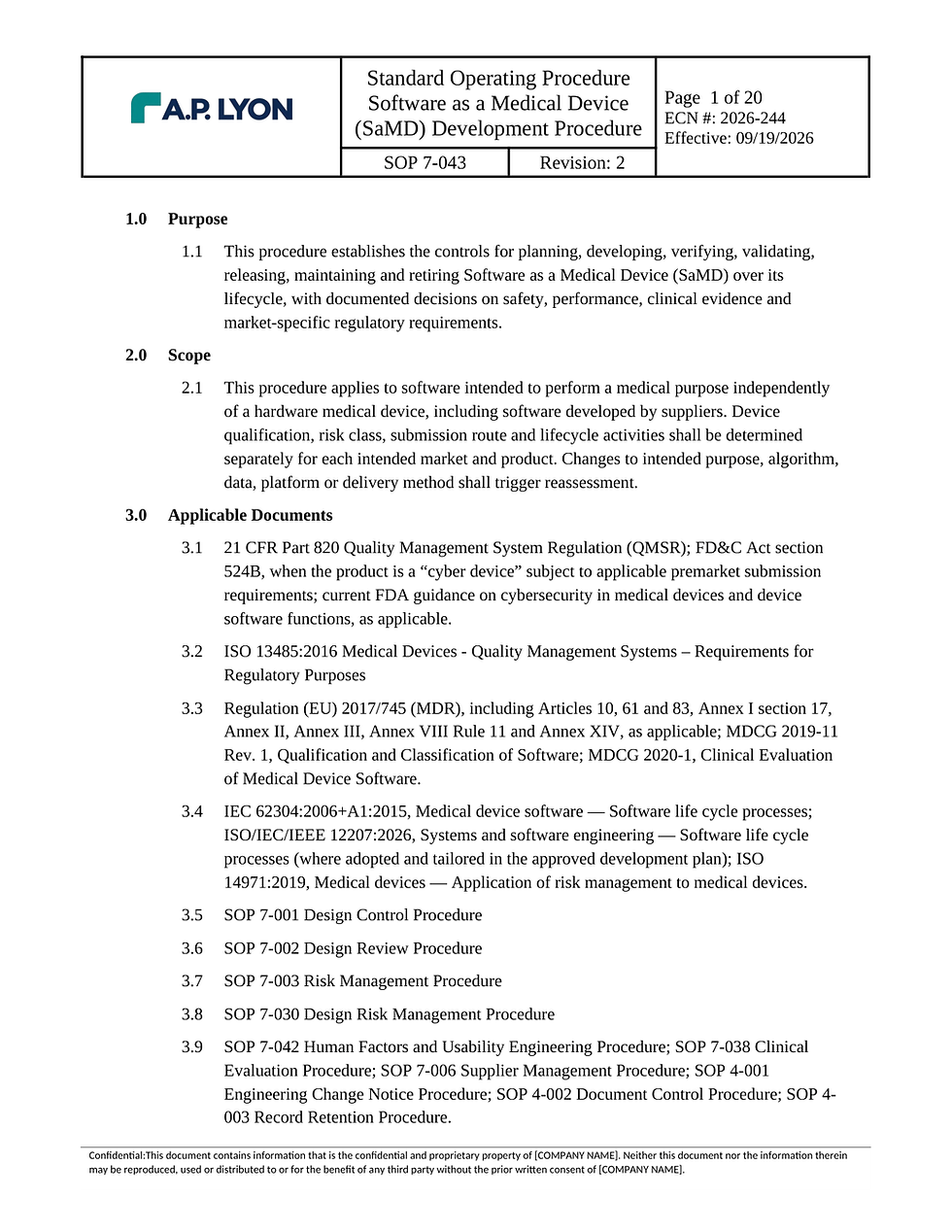
For software, distinguish a SaMD product-development procedure from validation of software used in production or quality activities. The Software Development Plan organizes lifecycle activities, while Software Clinical Evaluation addresses clinical evidence supporting software claims. Check scope and bundle overlap before purchasing.
Risk management procedures bundle
Practical guides
Connect design controls, risk management, usability and software evidence before selecting the supporting documents.
Medical Device Design Controls: Requirements, Reviews and Transfer
Medical Device Risk Management: Design and Process Risks
Medical Device Usability and Customer Requirements Validation
Medical Device Software: Development, Validation and Clinical Evidence
Choose a starting point for design, risk or software evidence
For a development team, the first decision is which workflow or evidence is missing. Design controls organize development; risk management connects hazards with controls and evidence; software planning, technical assurance and clinical evaluation answer different questions. Read the matching guide before choosing the individual document or a coordinated set.
Your decision | Starting point | What to check |
Design project needs a phase framework | Design Control and milestone reviews | Requirements, decisions and a controlled development record. |
Verification or intended-use evidence is missing | Design Verification and Validation | Keep technical requirements and intended-use questions distinct. |
Lifecycle risk process is incomplete | Risk Management and focused design/process analyses | Link controls to implementation and evidence. |
Medical-purpose software is being developed | SaMD Development and Software Development Plan | Define the lifecycle and configuration being released. |
Production or QMS software supports a quality decision | Software Validation | Assess the tool’s intended use and effects of failure. |
A software clinical claim needs support | Software Clinical Evaluation | Technical test success alone does not establish the clinical conclusion. |
What to address first
Start with the software guide for a software project, the design-control guide for development governance, or the risk guide for a risk-file gap. Then identify the required evidence and check what your existing QMS already covers.
Individual document, bundle or existing system?
The five-document software bundle joins SaMD Development, production/QMS Software Validation, Human Factors, Software Clinical Evaluation and the Software Development Plan. The four-procedure design-control bundle covers Control, Review, Transfer and Verification/Validation. The 26-procedure design collection strengthens an existing QMS; it is not a standalone system.
Relevant document options
Medical Device Software Procedure Bundle
Design Control Procedure Bundle | ISO 13485 | FDA QMSR
Risk Management Procedures Bundle | ISO 13485 | FDA QMSR
Medical Device Design and Development Procedures
Browse all documentation guides by topic
Use the medical device document selector